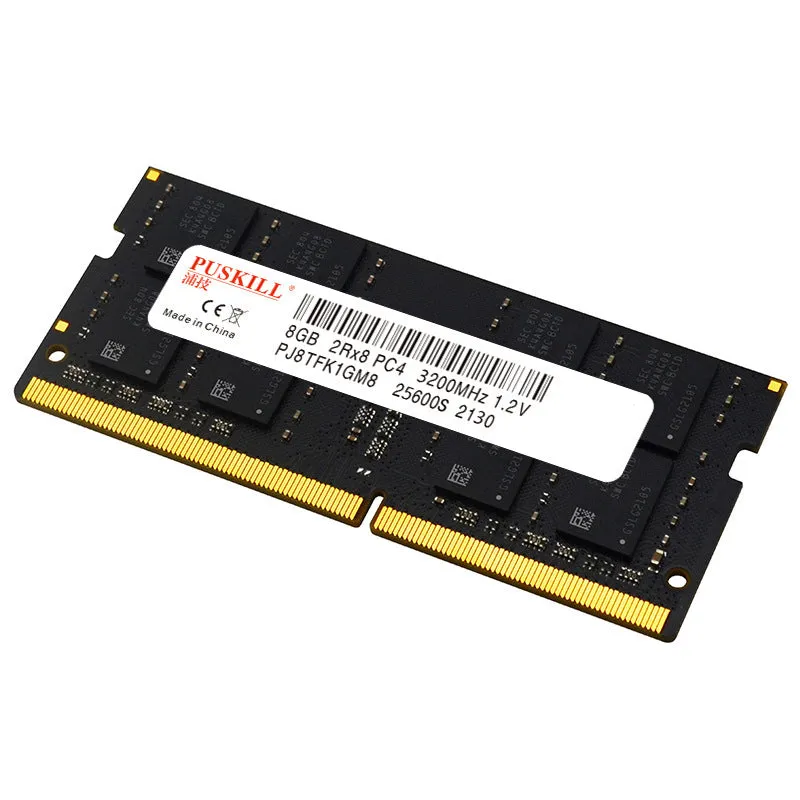
DDR4 notebook memory module laptop RAM upgrade DDR4 SODIMM memory bar for PC upgrade 16GB 32GB 4GB 8GB capacities 2400MHz 2666MHz 3200MHz frequencies 260-pin design 69mm x 30mm x 37mm dimensions single module for laptop performance


DDR4 notebook memory module laptop RAM upgrade DDR4 SODIMM memory bar for PC upgrade 16GB 32GB 4GB 8GB capacities 2400MHz 2666MHz 3200MHz frequencies 260-pin design 69mm x 30mm x 37mm dimensions single module for laptop performance
DDR4 Notebook Memory Module for Laptop RAM Upgrades in 4GB to 32GB Capacities
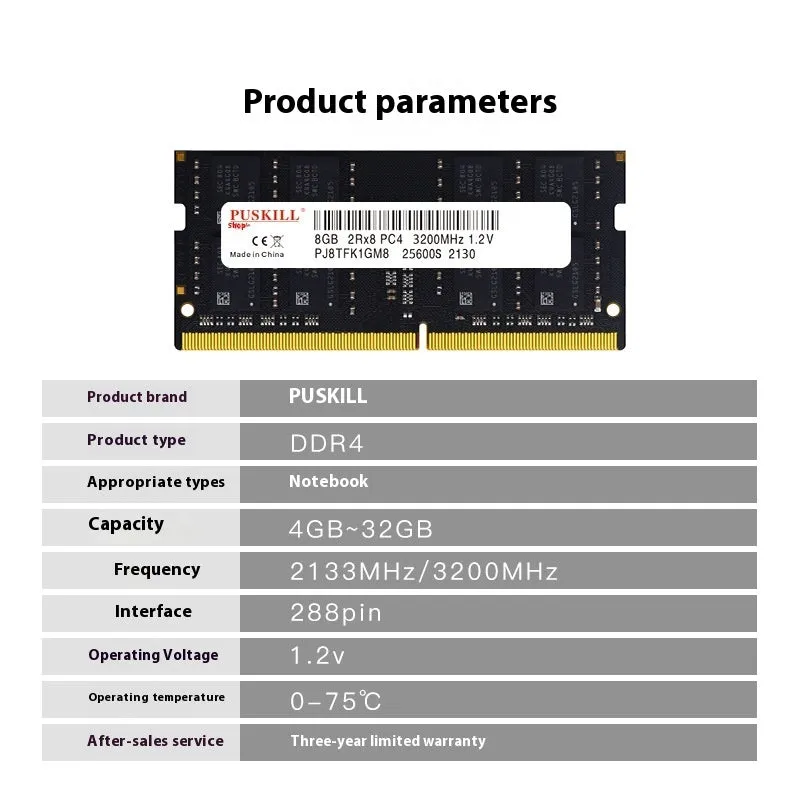
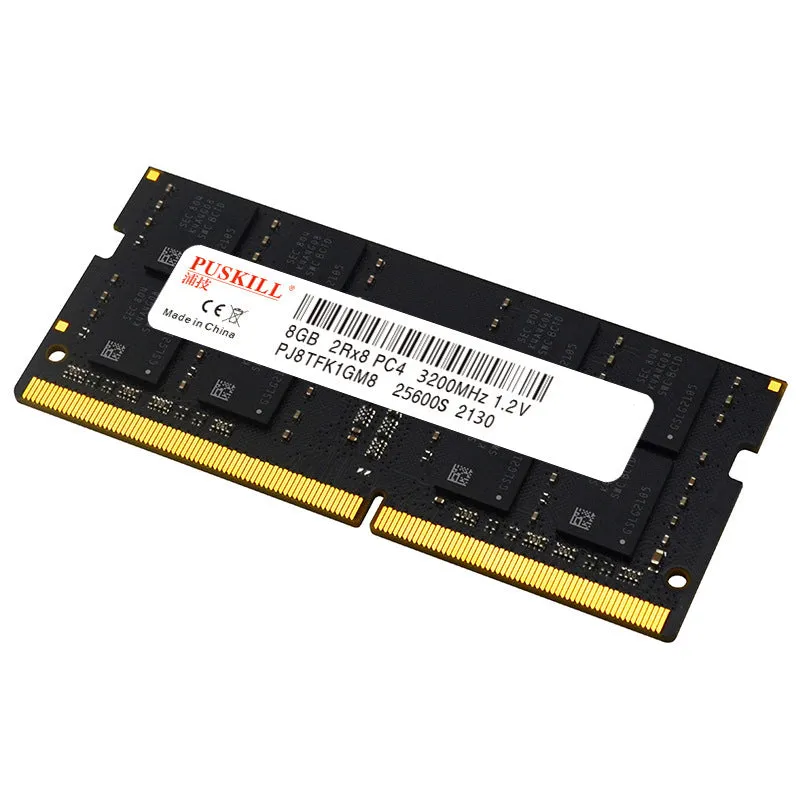
This product is a DDR4 memory module designed specifically for upgrading the RAM in notebook computers. Supplied as a single bar, it uses the industry-standard SODIMM (Small Outline Dual Inline Memory Module) form factor with 260 pins to ensure physical compatibility with most modern laptops. The available specifications cover a practical range for common upgrade scenarios, with memory capacities of 4GB, 8GB, 16GB, and 32GB, and supported JEDEC-standard frequencies of 2400MHz, 2666MHz, and 3200MHz. Its primary function is to provide users with a straightforward component replacement to improve system performance where insufficient RAM is causing slowdowns during multitasking or memory-intensive applications.
Features and Construction
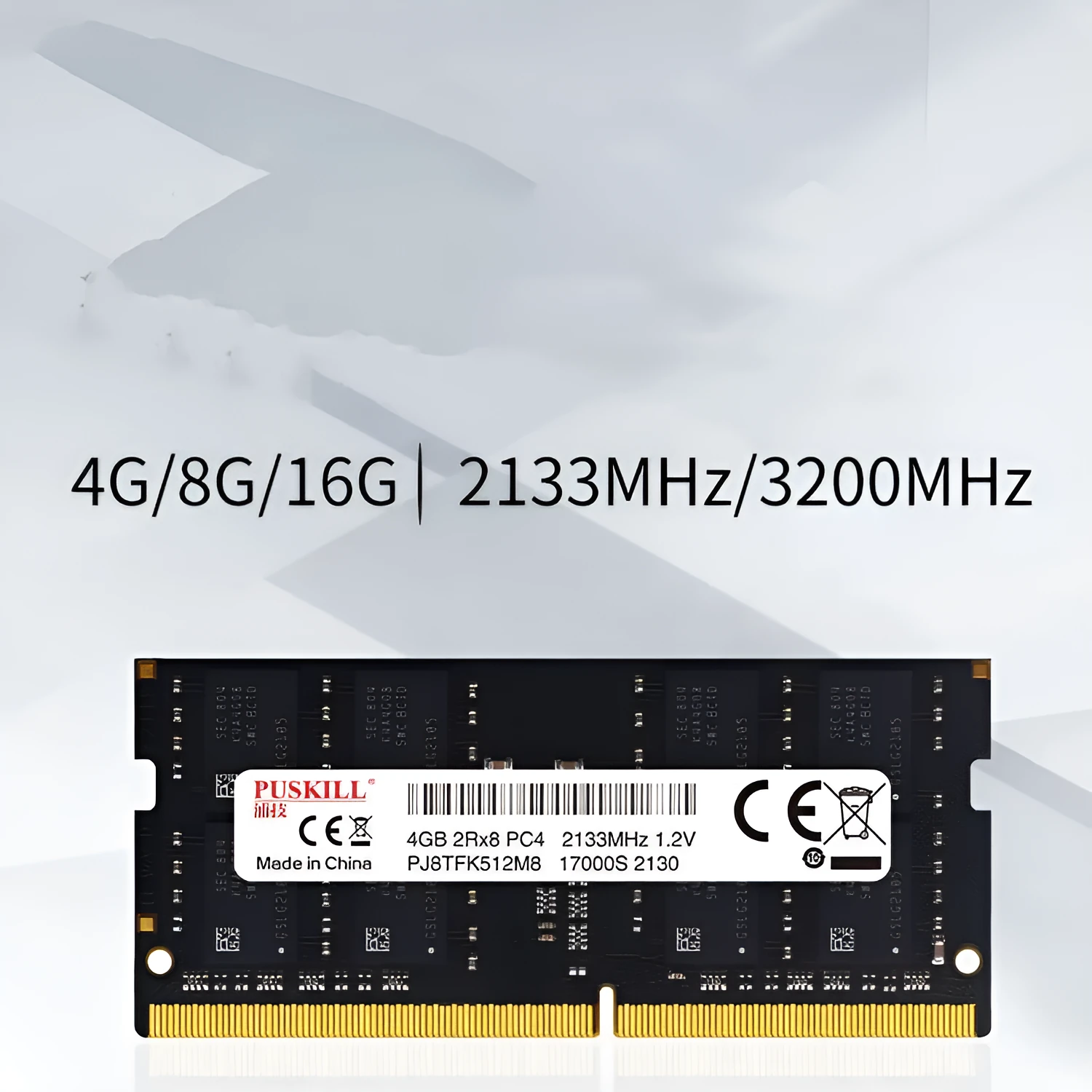
The module's core purpose is to serve as a compatible hardware upgrade for laptops. The source data provides its physical dimensions and key technical specifications necessary for determining fit and function.
Material and Build
The source text provides no specific details on the materials used in the PCB substrate, integrated memory chips, or any potential heatsink or coating. As an electronic component, its construction adheres to the functional requirements of a DDR4 SODIMM, but material quality and specific component brands are not stated. Potential buyers seeking information on warranty, chip manufacturer (e.g., Samsung, Micron, Hynix), or specific PCB layer count should consult the full product specification sheet from the manufacturer or retailer.
Size and Practical Fit
The module's dimensions are precisely given as 69mm in length, 30mm in width, and 37mm in height. This compact size is critical for fitting into the constrained space of a laptop chassis. The 260-pin edge connector design is the standard for DDR4 SODIMMs, ensuring it will physically interface with the corresponding slot on a compatible laptop motherboard. Before purchase, users must check their laptop's service manual or use system information tools to confirm it uses DDR4 SODIMMs and has an available slot or supports the capacity they intend to install.
Uses and Placement
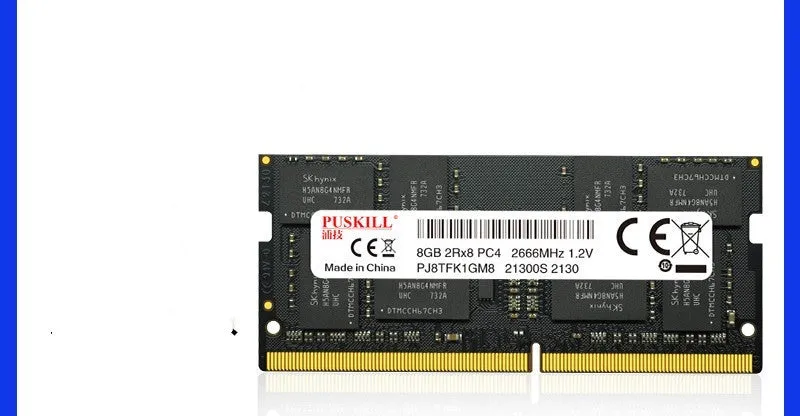
This memory module has a single, clearly defined use case: upgrading the RAM in a compatible notebook computer. Its value lies in extending the useful life or improving the performance of an existing system.
Event or Professional Use
For professional or power users, a RAM upgrade can be a cost-effective alternative to purchasing a new laptop. Users working with virtual machines, software development environments, graphic design applications, or large datasets may find that increasing from 8GB to 16GB or 32GB allows them to keep their current machine for longer. The availability of a 3200MHz frequency option can also benefit tasks where memory bandwidth impacts performance, such as video editing or scientific computing, assuming the laptop's chipset supports that speed.
Everyday Home Use
For general home and student use, upgrading from a lower capacity (like 4GB) to 8GB or 16GB can resolve common frustrations. This includes system slowdowns when having many browser tabs open alongside office applications, streaming services, or communication software. It can improve the experience of light gaming and general system responsiveness. Choosing a module with a higher frequency (like 2666MHz over 2400MHz) may provide a marginal performance boost if paired with a processor and chipset that can utilise the increased bandwidth.
Benefits and Buying Value
The primary benefit of this product is its function as a specific, replaceable component. Its value is tied directly to solving a diagnosed performance issue related to insufficient RAM.
Reuse and Low Maintenance
As a solid-state component with no moving parts, a memory module requires no ongoing maintenance once correctly installed. Its lifespan is typically aligned with the functional life of the laptop itself. The upgrade process is a one-time physical installation, after which the module operates passively as part of the system. It represents a reuse strategy for an existing laptop, potentially delaying the need for a full system replacement and its associated cost and electronic waste.
Why Choose This Product
This product is chosen when a user has identified that their laptop's performance is constrained by RAM capacity or speed and has verified compatibility. The clear specification range (4GB-32GB capacities, 2400-3200MHz speeds) allows matching an upgrade to the system's maximum supported configuration. The stated dimensions and 260-pin design provide the necessary information to check physical fit. The decision hinges on technical compatibility and the user's specific need for more memory, rather than subjective or aesthetic factors.