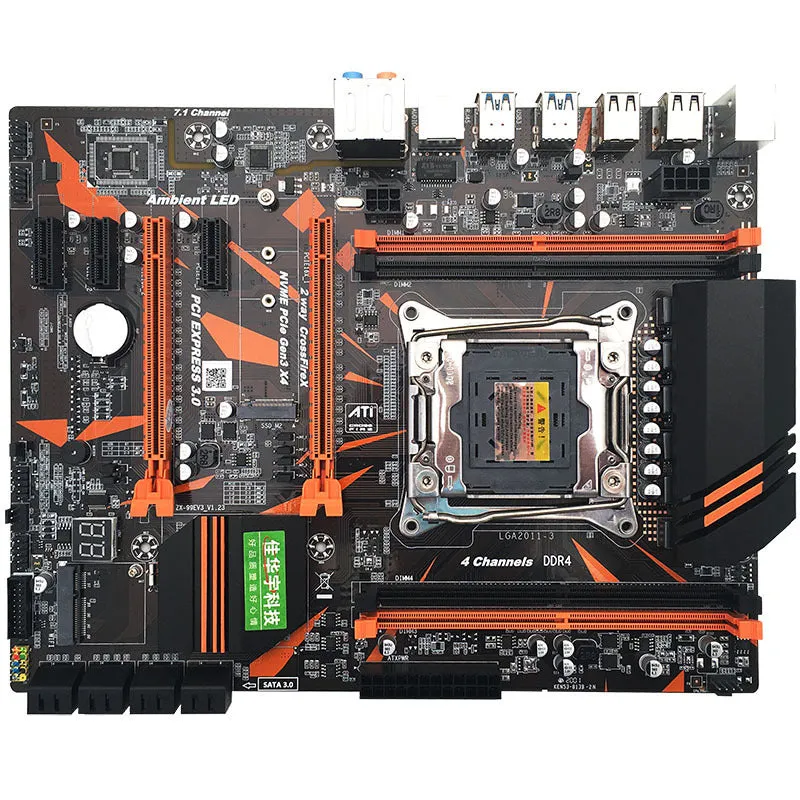
X99 computer motherboard LGA2011-3 socket supporting Intel Core i7 and Xeon E5 processors with four channel DDR4 memory up to 128GB, featuring PCI-E x16 slots, M.2 NVMe interface, 7.1 channel audio and Gigabit networking


X99 computer motherboard LGA2011-3 socket supporting Intel Core i7 and Xeon E5 processors with four channel DDR4 memory up to 128GB, featuring PCI-E x16 slots, M.2 NVMe interface, 7.1 channel audio and Gigabit networking
X99 LGA2011-3 motherboard supporting Intel i7 and Xeon CPUs with quad-channel DDR4 memory

This X99 chipset motherboard provides a versatile foundation for both high-performance desktop computing and professional workstation applications. Built around the LGA2011-3 socket architecture, it offers compatibility with two distinct processor families: Intel's enthusiast-grade Core i7 series (including models like 5820K and 5960K) and the Xeon E5 series typically used in server environments. The board's four DDR4 memory slots support standard desktop modules and server-grade REG ECC memory, though with the important operational constraint that i7 processors cannot utilise server memory simultaneously. With comprehensive expansion options including dual PCI-E x16 slots and high-speed storage interfaces, this motherboard bridges the gap between gaming systems and content creation workstations.
Processor and Memory Configuration

The motherboard's core specifications revolve around its processor socket and memory architecture, which determine its performance capabilities and user applications.
CPU Compatibility Details
The LGA2011-3 socket accepts processors from Intel's 2011-v3 platform, specifically supporting both the consumer-oriented Core i7 series and the professional Xeon E5 family. This dual compatibility allows system builders to create either gaming-focused machines using processors like the 5820K or 5960K, or workstation systems with Xeon CPUs designed for sustained multi-threaded workloads. The motherboard includes appropriate power delivery for these processors through an 8-pin CPU power connector, though it can operate with a 4-pin connection when paired with lower-power configurations.
Memory Specifications
Four DDR4 DIMM slots provide quad-channel memory architecture, supporting modules rated for 2400MHz or 2333MHz operation. The motherboard accepts both standard desktop DDR4 memory and server-grade REGistered ECC modules, though with the crucial limitation that Core i7 processors cannot utilise server memory technology. This restriction means builders must match their memory selection to their chosen processor type. With support for 32GB modules per slot, the system can scale to 128GB of total system memory, providing substantial capacity for memory-intensive applications.
Memory Selection Guidance
When configuring this motherboard, memory selection depends entirely on the chosen processor. For Core i7 builds, standard unbuffered DDR4 desktop memory modules must be used, while Xeon E5 configurations can utilise either standard modules or the more expensive REGistered ECC memory for enhanced error correction in mission-critical applications. The motherboard's memory controller supports the specified speeds without overclocking, and all four slots populate to enable the full quad-channel bandwidth advantage.
Expansion and Connectivity

The motherboard provides comprehensive expansion capabilities through multiple interface standards, catering to both storage and peripheral connectivity needs.
Storage Interface Options
Eight SATA3.0 ports offer traditional storage connectivity with 6Gb/s bandwidth for hard drives and SATA SSDs, while a dedicated M.2 socket provides PCIe NVMe support for the latest generation of high-performance solid-state drives. This M.2 interface operates at full PCIe bandwidth, enabling sequential read and write speeds significantly beyond SATA limitations. The combination of multiple SATA ports and high-speed M.2 support allows system builders to implement tiered storage strategies with both capacity and performance drives.
PCI Express Expansion
Two PCI-E x16 slots accommodate dual graphics card configurations for gaming or GPU-accelerated computing applications, operating at full x16 electrical bandwidth when populated individually or potentially bifurcated depending on processor capabilities. Three additional PCI-E x1 slots provide expansion for sound cards, network adapters, or other peripheral cards. This expansion layout balances graphics performance with general-purpose connectivity for specialised add-in cards.
External Connectivity
The rear I/O panel includes four USB 3.0 ports and six USB 2.0 ports for peripheral connectivity, alongside legacy PS/2 connections for keyboard and mouse devices. Audio connectivity supports 7.1 channel surround sound through standard 3.5mm jacks, while networking is handled by an integrated Realtek RTL8111H Gigabit Ethernet controller. The board also includes provisions for WiFi expansion through a dedicated interface, though the module itself is not included as standard.
Operation and Maintenance
Practical considerations for system assembly and ongoing operation ensure reliable performance from this motherboard platform.
Power Supply Requirements
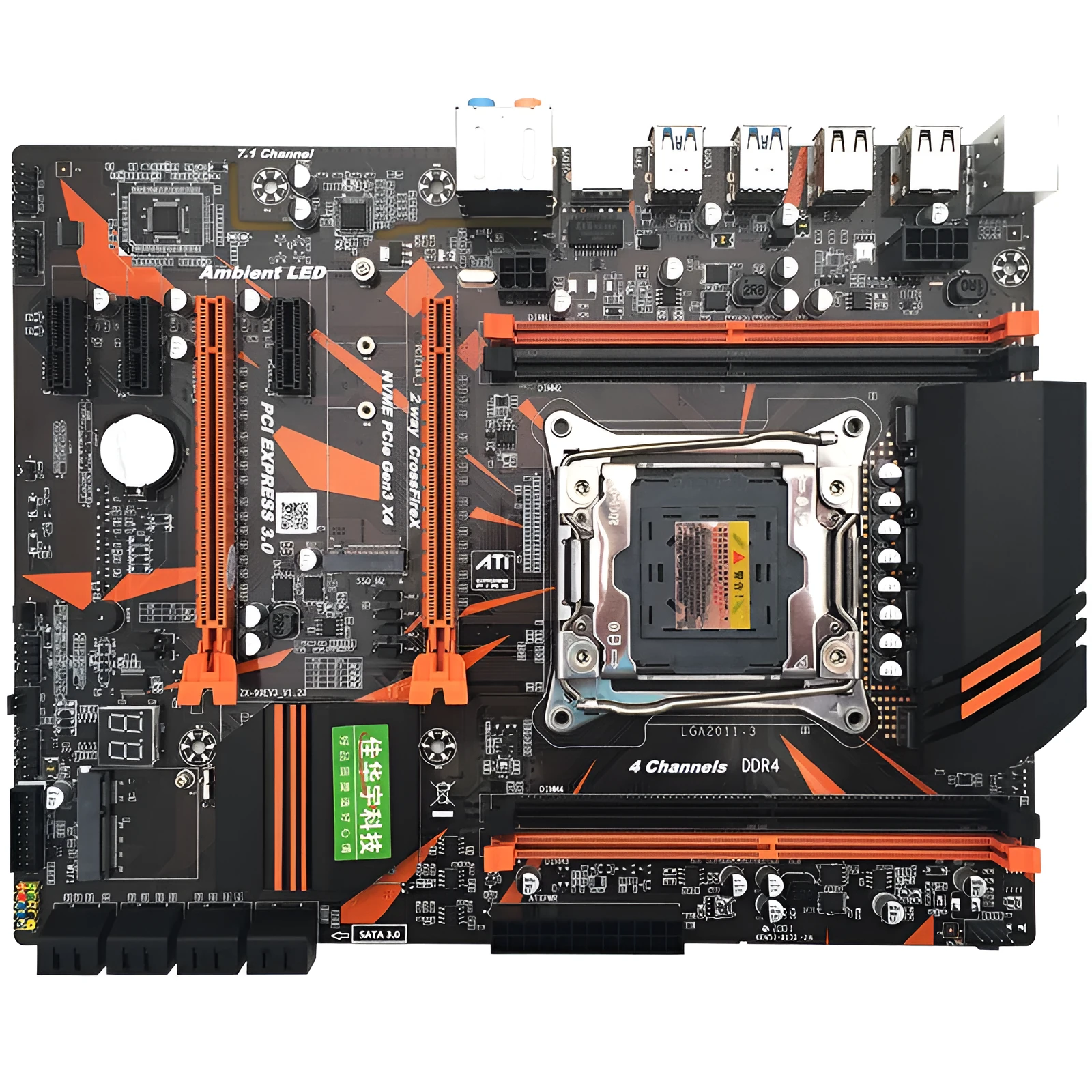
A 24-pin ATX power connector and 8-pin EPS12V CPU power connector must both be connected from the power supply unit for stable operation, particularly when using higher-core-count processors. The motherboard can function with only the 4-pin portion of the CPU power connector populated for basic configurations, but full 8-pin connection is recommended for optimal power delivery under load. Four distinct power regulation phases manage voltage delivery to the processor and memory subsystems.
Diagnostic Features
Integrated diagnostic tools include a digital fault code display that shows hexadecimal error codes during the boot process, helping identify issues with memory, storage, or other components before the operating system loads. An accompanying buzzer provides audible confirmation of successful POST completion or error conditions. These features simplify troubleshooting during initial system assembly or when diagnosing hardware problems.
Warranty and Support
The motherboard comes with a three-year warranty covering manufacturing defects, with the first year providing free repair or replacement services and the following two years offering cost-based maintenance. Product specifications may undergo continuous optimization between manufacturing batches, potentially resulting in minor component variations or colour differences that don't affect functionality. Buyers should verify the latest specifications directly with the manufacturer if precise component details are critical to their application.