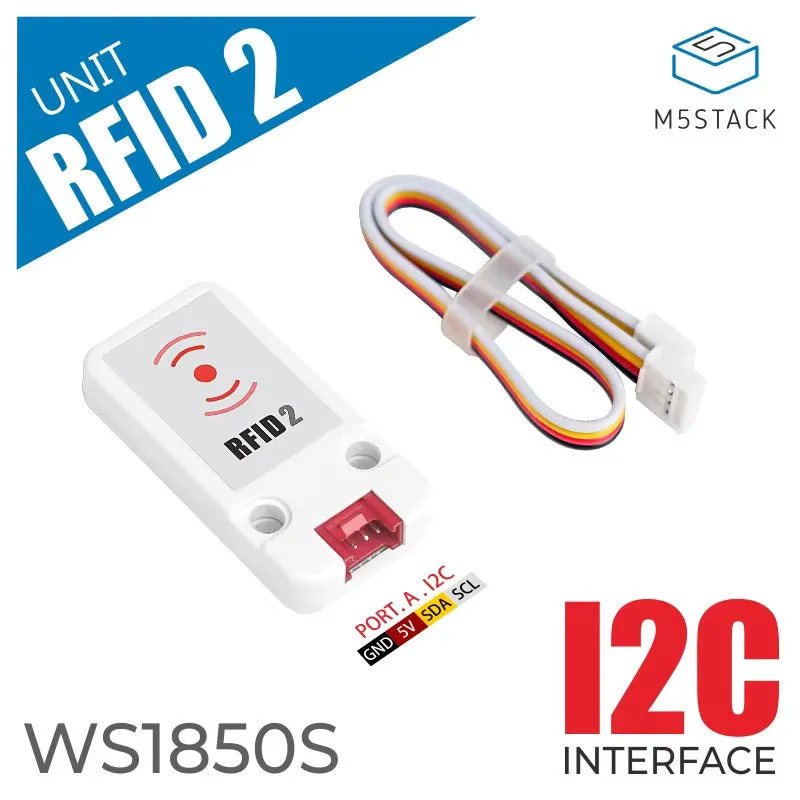
RFID sensor module WS1850S MHz 13.56MHz frequency 20mm reading distance for IoT Arduino UIFlow development with ISO14443A MIFARE NTAG protocols and LEGO compatible holes


RFID sensor module WS1850S MHz 13.56MHz frequency 20mm reading distance for IoT Arduino UIFlow development with ISO14443A MIFARE NTAG protocols and LEGO compatible holes
WS1850S 13.56MHz RFID Sensor Module for Arduino and IoT Development

This RFID sensor module, model WS1850S, is engineered for developers and makers working on Internet of Things applications requiring contactless identification. Operating at the standard 13.56MHz frequency, it facilitates the reading of compatible RFID tags at a short distance of under 20mm. Its primary design purpose is seamless integration into prototype builds, supported by common development platforms like Arduino and UIFlow, which allows for programming in both Blockly and Python. The module's compact form factor and inclusion of LEGO-compatible mounting holes offer flexibility in physical design, making it a practical component for educational projects, access control prototypes, inventory tracking systems, and interactive installations.
Features and Construction

The WS1850S is built around core specifications that define its capability and ease of use in a development context. Its construction prioritises reliable communication and integration with broader electronic systems.
Material and Build
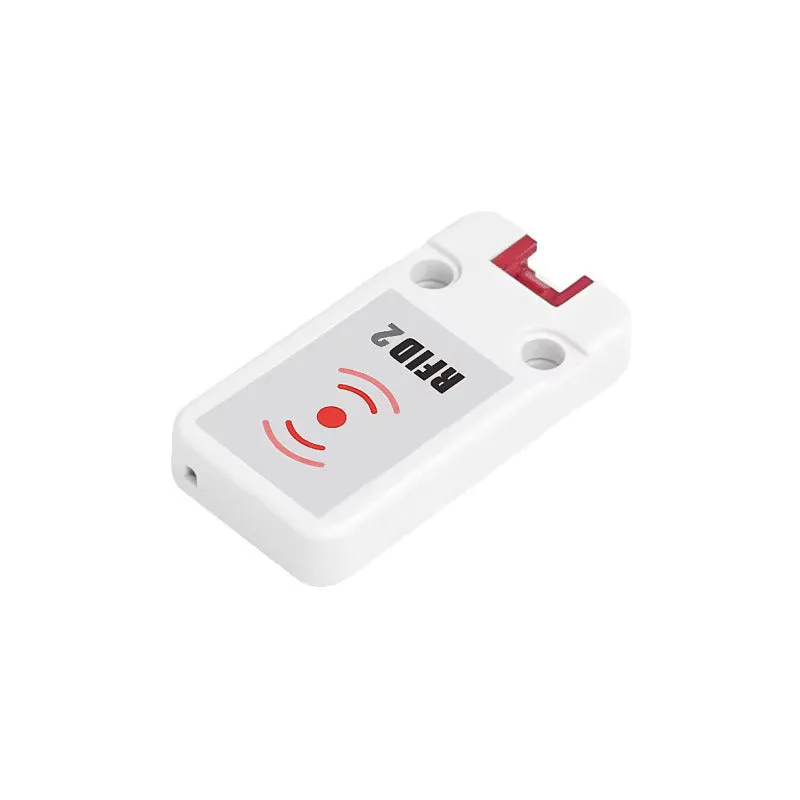
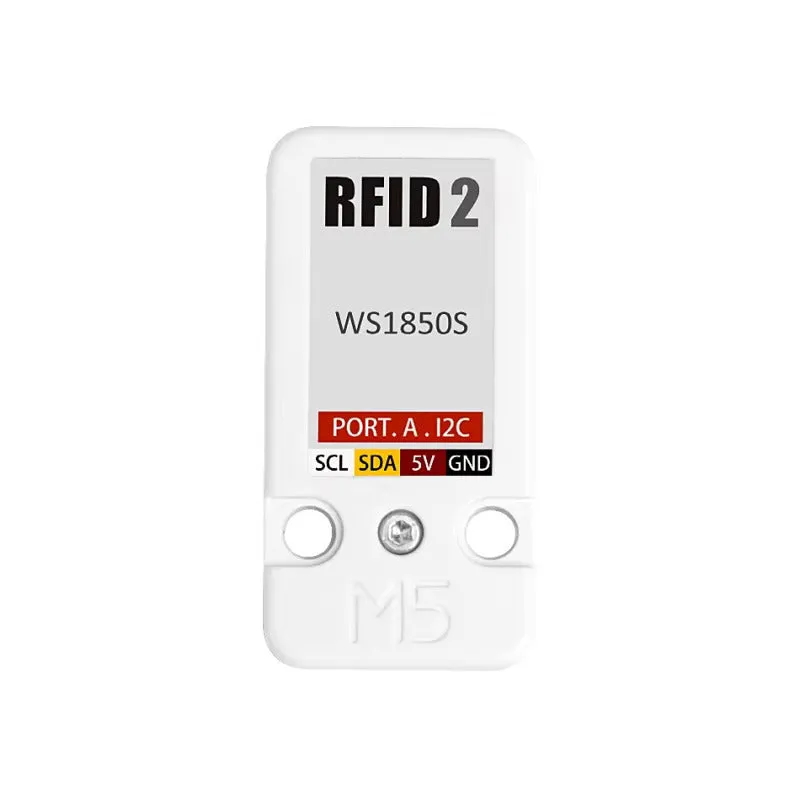
The module is built on a standard PCB housing the RFID transceiver circuitry and supporting components. It is supplied with an HY2.0-4P cable for connection to a host controller. The build is focused on functionality for development, with two integrated holes designed to be compatible with LEGO bricks, enabling creative and secure mounting solutions within prototype enclosures or demonstrators without the need for specialised brackets.
Size and Practical Fit
The module's dimensions are given as 7 by 2 units, indicating a compact profile suitable for space-constrained projects. While the specific unit of measurement (e.g., cm) is not explicitly stated in the source, this sizing information is useful for comparing its footprint against other components on a breadboard or within an enclosure. Its small size and the provided mounting holes contribute to a practical fit in a wide array of project boxes, robot chassis, or interactive art pieces.
Uses and Placement
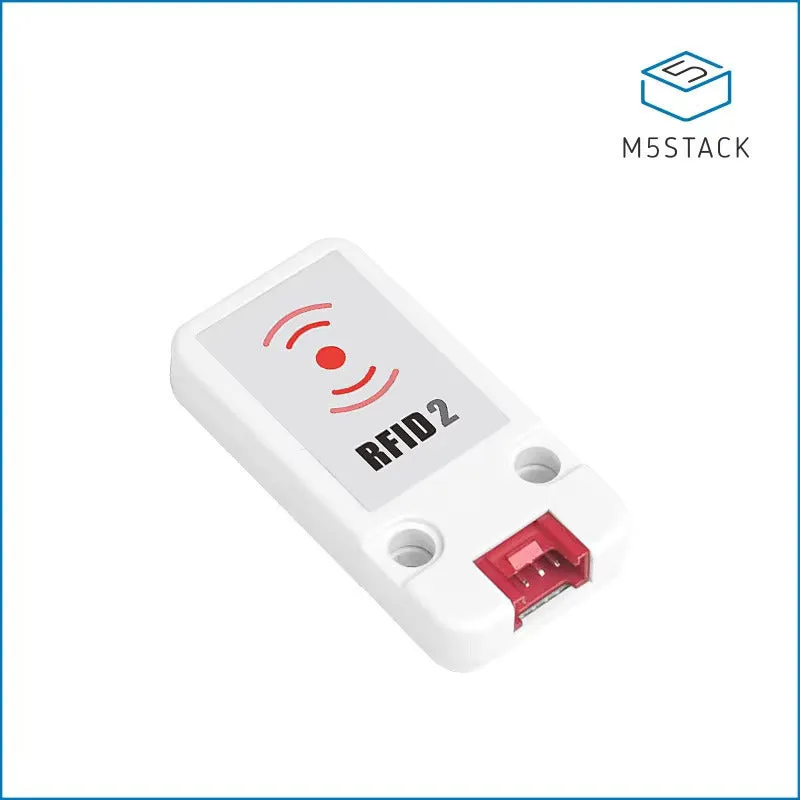
This sensor opens up possibilities for various applications that require automated identification without direct contact, serving both learning environments and professional prototyping.
Event or Professional Use
In professional or event settings, the module can be the core of prototype systems for tasks like asset tracking, where items tagged with compatible RFID labels can be logged as they pass a reader point. It could form part of a prototype access control system for doors or cabinets, or be used in interactive trade show displays where tapping a card triggers a digital response. Its support for ISO14443A, MIFARE, and NTAG protocols means it can work with a variety of common card and tag formats used in such scenarios.
Everyday Home Use
For hobbyists and in home maker spaces, this module is ideal for personal IoT projects. It can be used to create smart storage boxes that identify contents, build interactive games for children using RFID tokens, or develop customised pet feeder systems activated by a tag on a collar. The Arduino and UIFlow support lowers the barrier to entry, allowing users with different coding experience levels—from graphical Blockly to text-based Python—to implement their ideas.
Benefits and Buying Value

The value of this RFID module lies in its specific combination of technical specifications, developer support, and physical design, which together reduce integration effort for a range of projects.
Reuse and Low Maintenance
As a solid-state electronic module with no moving parts, it is designed for reuse across multiple projects. The stated data retention of over 10 years for its internal memory suggests a focus on long-term reliability for stored parameters. Its operating temperature range of -20°C to 85°C indicates resilience for use in environments beyond a typical indoor lab, potentially in garages or outdoor enclosures with thermal management.
Why Choose This Product
Choosing this specific module brings together several key advantages: a defined 13.56MHz operating frequency ensuring compatibility with a vast ecosystem of tags, explicit support for major development platforms (Arduino/UIFlow) with a fast I2C interface, and practical design touches like the LEGO-compatible holes. It provides a known reading distance (under 20mm) and protocol support, allowing developers to plan their system's interaction range and tag type from the outset, unlike more generic modules where these specs might be unclear.