
Arduino compatible ESP8266 WiFi development board with 11 I/O pins and OTA wireless upload capability, featuring an onboard 5V 1A switching power supply with maximum 24V input voltage support for microcontroller projects


Arduino compatible ESP8266 WiFi development board with 11 I/O pins and OTA wireless upload capability, featuring an onboard 5V 1A switching power supply with maximum 24V input voltage support for microcontroller projects
Arduino Compatible ESP8266 WiFi Development Board with Onboard Power Supply
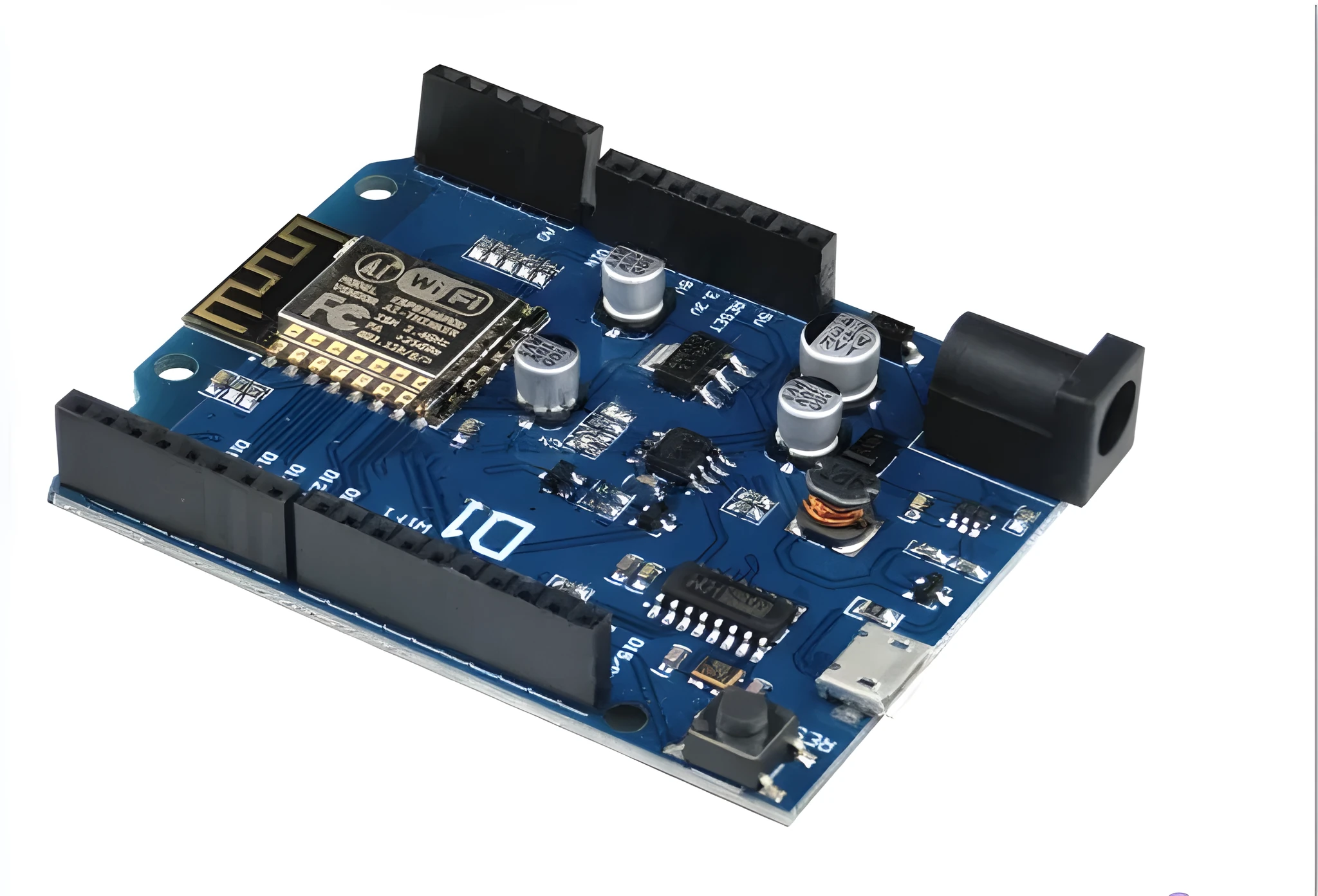
This WiFi development board provides Arduino compatibility while integrating ESP-8266EX chipset technology for wireless connectivity in microcontroller projects. It eliminates the need for separate WiFi modules through direct integration, offering 11 I/O pins and one ADC pin with 0-3.3V input range. The board includes an onboard 5V 1A switching power supply that accepts input voltages up to 24V, simplifying project power requirements. When programmed through the Arduino IDE after hardware package installation, it operates similarly to the Arduino UNO, providing familiar development experience for existing Arduino users. Development documentation for this black-colour board is available through the specified network storage download.
Features and Construction

The development board is built around the ESP-8266EX chipset, designed specifically for WiFi-enabled microcontroller applications. It maintains compatibility with the Arduino development environment while providing integrated wireless functionality.
Material and Build
The board construction features standard PCB materials with the ESP-8266EX chipset mounted securely. It includes an onboard 5V 1A switching power supply capable of accepting input voltages up to 24V maximum, providing regulated power for the board and connected components. The black colour provides visual distinction while maintaining professional appearance suitable for development environments.
Size and Practical Fit
The development board is designed for integration into projects requiring wireless connectivity. With 11 general-purpose I/O pins, it offers sufficient connectivity for sensors, displays, and other peripherals typical in microcontroller applications. The single ADC pin with 0-3.3V input range supports analogue sensor reading capability. The board's OTA wireless upload function enables remote firmware updates without physical connection.
Uses and Placement
This development board is suitable for projects requiring wireless connectivity combined with microcontroller functionality. Its Arduino compatibility makes it accessible to a wide range of developers familiar with that ecosystem.
Event or Professional Use
For professional development environments, the board provides WiFi connectivity for IoT prototypes, smart device development, and wireless sensor networks. The OTA upload capability supports remote deployment and updates for installed devices, reducing maintenance requirements. The onboard power supply accepts input voltages up to 24V, accommodating various power source configurations in professional installations.
Everyday Home Use
In home project environments, the board enables development of WiFi-connected home automation devices, smart sensors, and IoT gadgets. Arduino compatibility means existing Arduino sketches can be adapted for wireless applications. The familiar Arduino UNO-like operation reduces learning curve for hobbyists transitioning to wireless projects. The black colour suits discreet installation in home projects where appearance matters.
Benefits and Buying Value
The development board integrates multiple functions that would otherwise require separate components, providing practical value through component consolidation and simplified project design.
Reuse and Low Maintenance
The OTA wireless upload capability supports ongoing development without physical access to installed boards, enabling remote updates and maintenance. Arduino compatibility ensures existing code libraries and community resources remain accessible. The onboard power supply eliminates need for separate voltage regulation in many projects, reducing component count and potential failure points.
Why Choose This Product
This development board combines WiFi connectivity with Arduino compatibility and integrated power regulation in a single package. The ESP-8266EX chipset provides reliable wireless communication while the 11 I/O pins offer sufficient connectivity for most microcontroller projects. Development documentation available through network download provides reference material for project implementation. The board operates similarly to Arduino UNO when programmed through Arduino IDE, maintaining familiarity for existing Arduino developers.